
The Indian government addressed opposition concerns regarding the West Asia crisis in an all-party meeting, outlining its strategy for ensuring the security of the Indian diaspora, fulfilling energy needs, and maintaining diplomatic relations with key partners. The government also dismissed Pakistan's reported mediation efforts.

The Indian government is unlikely to allow a parliamentary debate on the West Asia crisis, citing prior briefings by the External Affairs Minister. This decision comes amid opposition protests and a pending no-confidence motion against the Speaker.

Dinesh Trivedi's experience as a businessperson and his fluency in Bengali are expected to be crucial in strengthening India-Bangladesh relations, particularly in attracting Indian investments to Dhaka.

Union ministers paid tribute to the victims of the Pahalgam terror attack on its first anniversary, reaffirming India's commitment to combating terrorism with a firm and zero-tolerance policy.

The Indian government reveals that the United States has deported over 18,000 Indian nationals since 2009, with a focus on human trafficking investigations and concerns over the treatment of deportees.

Prime Minister Narendra Modi praised the speeches of Defence Minister Rajnath Singh and External Affairs Minister S Jaishankar in the Lok Sabha for articulating the success of Operation Sindoor and India's global outreach respectively.

A court in Ballia, Uttar Pradesh, sentenced six individuals to 10 years in jail for culpable homicide related to a 2014 land dispute that resulted in the death of one man.

India has voiced its deep concern over reports of increasing civilian casualties in Lebanon due to Israeli strikes, emphasising the protection of civilians and the importance of international law.

Both Houses of Parliament were adjourned sine die, concluding a Budget session marked by the passage of key legislations and the defeat of a Constitution amendment bill on women's reservation. The session saw frequent opposition protests and discussions on various issues, including the West Asia conflict.

India observed the first anniversary of the Pahalgam terror attack, with leaders paying homage to the victims and asserting the country's commitment to fighting terrorism.

There is no cause for concern, as the overall situation arising out of the crisis is firmly under control, the Centre informed while briefing political parties at the all-party meet.

Prime Minister Narendra Modi convened a meeting with senior ministers to assess the impact of the evolving situation in West Asia on India's crude oil, gas, petroleum, power, and fertiliser sectors, focusing on ensuring uninterrupted supply and stable logistics.

National Security Advisor Ajit Doval hosted Bangladesh Foreign Minister Khalilur Rahman for a dinner meeting, signalling efforts to repair bilateral ties after a period of heightened diplomatic tension.

Prime Minister Narendra Modi will review the impact of the West Asia conflict on India's food, energy, and fuel security with senior cabinet ministers. The meeting follows previous discussions and concerns raised about global energy crises and supply chain disruptions.

The Indian government has addressed Parliament regarding a case of an Indian national seeking repatriation from Russia due to the situation in West Asia and the Gulf region. The government also responded to queries about Indian nationals denied entry to South Korea and seafarers detained in foreign countries.

The Congress party has criticised Prime Minister Narendra Modi's diplomatic efforts following the ceasefire agreement between the US and Iran, facilitated in part by Pakistan. The party claims this development undermines Modi's strategy and exposes his perceived failures in foreign policy.

He added that opposition parties were assured that their concerns regarding the impact of the West Asia situation on India and the safety of Indian citizens were addressed in detail.

Prime Minister Narendra Modi convened the Cabinet Committee on Security to address the impact of the West Asia conflict on Indian citizens, focusing on safeguarding them from the conflict's effects and ensuring the smooth flow of essential supplies.

India's handling of the Iran crisis reflects a growing strain between strategic autonomy and geopolitical alignment, observes Ambassador M K Bhadrakumar.

The Indian government has convened an all-party meeting to discuss the ongoing crisis in West Asia, following Prime Minister Modi's address to Parliament on the situation and its potential impact on India.

'The West Asia or the Gulf crisis has shown that what we develop as national infrastructure when things are not as bad as they could be, we forget to plan for adversities.'
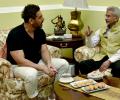
Dr Jaishankar meets up with movie star John Abraham, who plays J P Singh, currently India's ambassador to Israel, in The Diplomat.
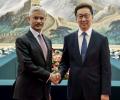
India and China should build on 'good progress' in normalising the bilateral ties to address border-related issues including de-escalation, and it is essential to avoid 'restrictive trade measures and roadblocks', External Affairs Minister S Jaishankar said on Monday during talks with his Chinese counterpart Wang Yi.
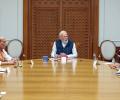
Prime Minister Narendra Modi will chair a meeting of the Cabinet Committee of Security (CCS) in Delhi to discuss the global situation following the attack on Iran and the killing of Iranian Supreme Leader Ayatollah Ali Khamenei.
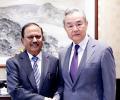
Wang is travelling to India days ahead of Prime Minister Narendra Modi's planned trip to the Chinese city of Tianjin to attend the annual summit of the Shanghai Cooperation Organisation.

Union Home Minister Amit Shah is expected to respond to the debate on the no-confidence motion against Lok Sabha Speaker Om Birla, following allegations of partisan conduct. The motion, moved by opposition members, questions Birla's impartiality and handling of House proceedings.

What we are watching is something different: A fog manufactured and maintained by the people who started the war, so that the question of why it was started never has to be answered, observes Prem Panicker in his must read blog on the war in the Middle East.

The Cabinet Committee on Security (CCS) has reviewed the evolving situation in West Asia, directing departments to assist Indian nationals affected by recent developments and emphasizing the need for dialogue and diplomacy.
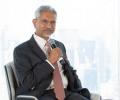
External Affairs Minister S Jaishankar is scheduled to visit China for an SCO conclave, marking a significant step in easing tensions after the 2020 border standoff. Discussions on the boundary dispute are also anticipated.

24 Indian-flagged vessels with 677 Indian seafarers were currently located west of the Strait of Hormuz, and four vessels with 101 Indian seafarers were stationed east of the strategic waterway.

External Affairs Minister S Jaishankar has informed a parliamentary panel that Pakistan was notified about Indian strikes on terror camps in their territory only after they were carried out. He also clarified that the decision to halt the military operation was taken bilaterally following a request from Pakistan, and there was no US mediation involved. Jaishankar emphasized India's zero-tolerance policy against terrorism and the importance of conveying a united message against it globally.

The Indian government informed Parliament that India and the US are engaged in negotiations for a mutually beneficial multi-sectoral bilateral trade agreement. The two countries also cooperate on strategic, economic, and defense matters, managing divergences through high-level dialogues.

'I suspect that Bangladesh being given permission stuck in India's official craw, and this story was an attempt to balance the scales by giving the impression that a similar waiver had been given to India as well.'

Prime Minister Narendra Modi is scheduled to visit Israel for two days to discuss bilateral and regional issues, marking his second visit to the Jewish state and highlighting the growing strategic partnership between India and Israel.

Gandhi held up Naravane's unpublished "memoir" and said he would like the youngsters in India to know that this 'book' exists despite the government claiming otherwise.

Indian External Affairs Minister S Jaishankar and his Canadian counterpart Anita Anand held their first phone conversation, focusing on strengthening bilateral economic ties and advancing shared priorities. The call comes amid efforts to repair relations between the two countries, which had been strained under the previous Canadian government. Both ministers expressed their commitment to improving ties and working together on areas of mutual interest. The conversation follows a period of tensions stemming from allegations of Indian involvement in the killing of a Sikh activist on Canadian soil.

General Manoj Mukund Naravane's memoir has triggered a controversy by revealing behind-the-scenes decision-making during the 2020 India-China standoff in Ladakh. Its candid account of military and political responses at a critical moment has reignited debate over civil-military relations, accountability, and the limits of disclosure in matters of national security.
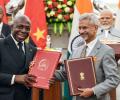
India's External Affairs Minister S Jaishankar has called on Europe to display sensitivity and mutuality of interest for deeper ties with India, stating that New Delhi seeks partners, not "preachers." Jaishankar emphasized the importance of "Russia realism" in India's foreign policy, highlighting the natural complementarity between India and Russia as a resource provider and consumer. He criticized attempts by the West to address the Russia-Ukraine conflict without Russia's involvement, arguing it "challenged the basics of realism." Jaishankar also stressed the importance of finding common ground with the US, suggesting that focusing on mutuality of interest rather than ideological differences is key to successful engagement.
US Secretary of State Marco Rubio spoke separately with External Affairs Minister S Jaishankar and Pakistani Deputy Prime Minister and Foreign Minister Ishaq Dar, State Department Spokesperson Tammy Bruce said in a statement early Saturday.
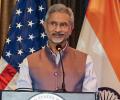
India's External Affairs Minister S Jaishankar, representing Prime Minister Narendra Modi, delivered a letter from Modi to US President Donald Trump at his inauguration on Monday. Jaishankar's presence at the inauguration is a common practice for India, sending special envoys to attend the swearing-in ceremonies of heads of state and government. The letter's content remains undisclosed.
